Welcome to Rejuvenation Science®!
 Questions? Please call us at
1-888-737-3588 TOLL FREE
Welcome to Rejuvenation Science®!
Questions? Please call us atCiba Found Symp. 1989;143:41-53; discussion 53-59, 281-285.
Fraser JR, Laurent TC.
Department of Medicine, University of Melbourne, Parkville, Victoria, Australia.
The highest concentrations of hyaluronan occur in synovial fluid, vitreous body, skin and certain specialized tissues such as umbilical cord and rooster comb, during fetal development, and in tissue repair and regeneration. The largest amounts are found in the intercellular matrix of skin and musculoskeletal tissues. Turnover in the bloodstream is normally in the range of 0.3-1.0 microgram min-1/kg body weight. Circulating hyaluronan is mostly derived from lymph. Lymph nodes may nevertheless extract as much as 80-90% from peripheral lymph before it can reach the bloodstream. Turnover in peripheral tissues may be effected by degradation in situ, or by transfer into lymph by diffusion or hydrodynamic forces. Hyaluronan is firmly bound in specific association with cells or binding proteins but much of it exists in freely mobilized compartments with a half-life of two days or less, and it is metabolized after transport elsewhere. Metabolic degradation of hyaluronan is principally intracellular and relies on uptake by a receptor which, in contrast with other hyaluronan-binding structures, also binds chondroitin sulphate. It is suggested that this dual specificity may be primarily associated with metabolic degradation of hyaluronan. Uptake and metabolism are primarily effected in liver and lymph node by endothelial cells lining the sinusoids of each. Further studies indicate that in lymph nodes and in spleen, macrophage-like cells intertwined with the endothelial cells also take up hyaluronan. The metabolic cycle from polymer to monosaccharides, acetate and beyond can be completed in vivo within 10 minutes.
Drugs. 1994 Mar;47(3):536-66.
Goa KL, Benfield P.
Adis International Limited, Auckland, New Zealand.
Hyaluronic acid is a naturally occurring polysaccharide with distinct physicochemical properties which underlie its application as a viscoelastic tool in ophthalmological surgery. In cataract surgery the role of hyaluronic acid in facilitating procedures and protecting the corneal endothelium is well established. Some benefit has also been gained with the use of hyaluronic acid in penetrating keratoplasty, trabeculectomy, retinal reattachment and trauma surgery, although its efficacy in these indications is less well-defined in the published literature. In addition to its lubricating and cushioning properties, demonstration of some in vitro anti-inflammatory activity and a possible disease-modifying effect for hyaluronic acid in animals has prompted its investigation as a treatment in osteoarthritis and, to a much lesser extent, in rheumatoid arthritis. Hyaluronic acid 20 mg, as weekly intra-articular injections for 3 to 7 weeks, improved knee pain and joint motion in patients with osteoarthritis. Although this occurred to a greater degree than with placebo in most comparisons, the effects of hyaluronic acid was similar to those of placebo in the largest trial. In the few available comparisons with other agents, hyaluronic acid appeared equivalent to methylprednisolone 40 mg (for 3 weeks) and to a single injection of triamcinolone 40 mg. Hyaluronic acid was distinguished from other therapies by providing a sustained effect after treatment discontinuation. Together with its very good tolerability profile, these properties justify further study of hyaluronic acid in patients with osteoarthritis. Some limited evidence of improvement in patients with rheumatoid arthritis, and a possible healing effect of hyaluronic acid on tympanic membrane perforations, represent additional areas of interest for future investigation. In summary, hyaluronic acid is a well-established adjunct to cataract surgery and may prove to be a promising option in the treatment of patients with osteoarthritis. Its very good tolerability provides further impetus for examination of its potential role in an extended scope of arthritic and ophthalmological indications, and in wound healing.
Exp Lung Res. 1997 May-Jun;23(3):229-244.
Cantor JO, Cerreta JM, Armand G, Turino GM.
Columbia University College of Physicians and Surgeons, New York, New York, USA.
Previously, this laboratory has shown that intratracheally administered hyaluronic acid (HA) significantly reduces air-space enlargement in a hamster model of emphysema induced with pancreatic elastase. Whereas HA was given immediately following elastase in those initial studies, the current investigation determined the effect of instilling HA up to 2 h before or after intratracheal administration of elastase to hamsters. Both 1 and 2 mg HA, given 2 h before pancreatic elastase, significantly decreased (p < .05) air-space enlargement compared to controls (as measured by the mean linear intercept). Instillment of 2 mg HA, 1 h after pancreatic elastase, had a similar effect (p < .05). In contrast, 1 mg HA, given 1 or 2 h after pancreatic elastase, did not significantly affect the mean linear intercept. Against human neutrophil elastase, HA exhibited the same protective effect. While neutrophil elastase induced less air-space enlargement than pancreatic elastase, both 1 and 4 mg of HA, given 2 h prior to the enzyme, still produced a significant reduction (p < .05) in the mean linear intercept. HA exerted this effect despite the fact that it initiates a transient influx of neutrophils into the lung. Since HA does not slow the clearance of intratracheally instilled [14C] albumin from the lung, its mechanism of action may not involve physical interference with the movement of elastase through the lung, but may instead depend on interaction with elastic fibers. Evidence for an association between these two matrix constituents was provided by studies using fluorescein-labeled HA. Overall, these results further suggest that HA may be useful in preventing lung injury by elastases.
Br J Ophthalmol. 1997 Jul;81(7):533-6.
Yokoi N, Komuro A, Nishida K, Kinoshita S.
Department of Ophthalmology, Kyoto Prefectural University of Medicine, Japan.
AIMS/BACKGROUND: The aim of this study was to assess quantitatively the effectiveness of hyaluronan on corneal disruption in patients with dry eye. Corneal epithelial barrier function was evaluated by measuring fluorescein permeability using a slit-lamp fluorophotometer. METHODS: 11 patients with dry eye were assigned to this study. Hyaluronan ophthalmic solution (0.1% hyaluronic acid) was instilled five times a day to the right eye, in addition to the usual artificial tear solutions. The left eye received only the artificial tear solutions. Corneal barrier function was evaluated on the pretreatment day, and at 2 and 4 weeks after treatment. Fluorophotometry was used to measure fluorescein uptake at the central and lower corneal portions. RESULTS: Two weeks after treatment, hyaluronan treated right corneas showed significant corneal epithelial barrier improvement in the lower portion, compared with the pretreatment day (p < 0.025). Four weeks after treatment, the treated corneas showed significant improvement in the central corneal portion (p < 0.025) and improvement in the lower portion, compared with the pretreatment day. The untreated left corneas, on the other hand showed no improvement during the course of the study. CONCLUSION: This study suggests that hyaluronan is effective in the treatment of corneal epithelial disruption in dry eye.
J Invest Dermatol. 1999 Nov;113(5):740-6.
Brown TJ, Alcorn D, Fraser JR.
Department of Biochemistry and Molecular Biology, Monash University, Melbourne, Victoria, Australia.
Hyaluronan has recently been introduced as a vehicle for topical application of drugs to the skin. We sought to determine whether hyaluronan acts solely as a hydrophilic reservoir on the surface of intact skin or might partly penetrate it. Drug-free hyaluronan gels were applied to the intact skin of hairless mice and human forearm in situ, with and without [3H] hyaluronan. [3H]hyaluronan was shown by autoradiography to disseminate through all layers of intact skin in mouse and human, reaching the dermis within 30 min of application in mice. Cellular uptake of [3H]hyaluronan was observed in the deeper layers of epidermis, dermis, and in lymphatic endothelium. Absorption through skin was confirmed in mice by chromatographic analysis of blood, urine, and extracts from skin and liver, which identified 3H as intact hyaluronan and its metabolites, free acetate and water. Hyaluronan absorption was similarly demonstrated without polyethylene glycol, which is usually included in the topical formulation.
[3H]hyaluronan absorption was not restricted to its smaller polymers as demonstrated by the recovery of polymers of (360-400 kDa) from both blood and skin. This finding suggests that its passage through epidermis does not rely on passive diffusion but may be facilitated by active transport.
This study establishes that hyaluronan is absorbed from the surface of the skin and passes rapidly through epidermis, which may allow associated drugs to be carried in relatively high concentration at least as far as the deeper layers of the dermis.
Am J Orthop. 2000 Feb;29(2):80-8; discussion 88-9.
Wright KE, Maurer SG, Di Cesare PE.
Musculoskeletal Research Center, Department of Orthopaedic Surgery, Hospital for Joint Diseases Orthopaedic Institute, New York, New York, USA.
Viscosupplementation therapy can restore the elastic and viscous properties of synovial fluid and thus recreate the intra-articular joint homeostasis that is disrupted in the degenerative joint. Hyaluronan (hyaluronic acid) products have been developed and used for viscosupplementation therapy in osteoarthritis. Viscosupplementation treatments using these products are well tolerated. Because viscosupplementation therapy is based on the concept of replenishing a normal physiological component of synovial fluid and cartilaginous tissue, exogenous administration of hyaluronic acid has the potential to have few side effects or local or systemic reactions.
Viscosupplementation represents an alternative treatment for patients with osteoarthritis in which oral medications and/or surgery are not options or are ineffective.
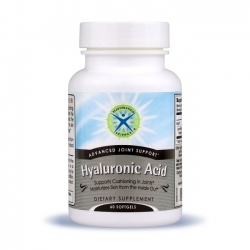
NEWPORT BEACH, Ca., February 3, 2004– BioCell Technology LLC, the exclusive suppliers of the Patented BioCell Collagen II® ingredient, released results from a double blind clinical study proving that the naturally occurring Hyaluronic Acid (HA) in the BioCell Collagen II® product has significant peak absorption and steady state bioavailability in normal volunteer subjects. Dr. William Judy, senior scientist at SIBR Research, called the study “groundbreaking science” and noted BioCell Technology’s revolutionary form of a reduced molecular weight HA manufactured using patented technology, is absorbed and is therefore readily available for use by the body. This is in contrast to previous published studies which showed that other HA forms were not absorbed and thus unavailable for use by the human body,
In a 36-hour peak absorption study using a single dose, BioCell Collagen II® HA significantly increased in the blood in four hours and peaked at a level 7008.62% above control in twelve (12) hours (P≤0.05). In the blood, HA was rapidly metabolized to two metabolites 1/600th the size of the ingested HA.
In a 28-day steady state bioavailability study using a constant daily dose, after seven (7) days, BioCell Collagen II® HA and its metabolites in the blood became stable, and these metabolites remained significantly increased (p≤0.001) throughout the balance of the study (HA at 3542.58% above control and HA metabolite at 11890.15% above control).
“This unprecedented study on hyaluronic acid, a key element in the unique matrix of BioCell Collagen II® which consists of Collagen Type II, Chondroitin Sulfate, and Hyaluronic Acid, demonstrates a synergistic effect that allows for the impressive absorption as indicated in these exciting and promising studies. BioCell Technology has expanded its intellectual property profile and has a patent pending to cover oral and topical applications of hyaluronic acid derived from various natural sources for use in dietary supplements and cosmetics,” said Suhail Ishaq, Vice President of BioCell Technology, LLC.
By determining the rate and magnitude of HA absorption and its bioavailability, this study using the BioCell Collagen II® product clearly demonstrates that this HA form has the physical characteristics necessary to allow it and its metabolites to move rapidly from the blood to the tissues. These findings further support the previous documented efficacy of BioCell Collagen II® in the management of joint and skin care.
Findings Could Impact Burgeoning Joint Care Supplement Category
Washington. D.C., April 18, 2004 – A consortium of scientists released clinical research results about oral delivery of radiolabeled Hyaluronan (HA) and its ability to be taken up by joints. Dr. Alex Schauss, Director of AIBMR, presented the findings at the 2004 Experimental Biology conference, conducted by the Federation of American Societies for Experimental Biology. Hyaluronan has been used for years in veterinary and human medicine as an injection to replace lost joint fluid.
The study was led by Dr. Schauss and conducted by a consortium of scientists from the Life Sciences Division of the American Institute for Biosocial and Medical Research Inc. in Puyallup, Washington and the National “FJC” Research Institute for Radiobiology and Radiohygiene, National Institute for Health in Budapest, Hungary. The research was supported by Weider Nutrition International.
“This is the first time hyaluronic acid has been reported to be absorbed orally, which paves the way for HA dietary supplements to be introduced and deliver on anti-aging and joint health promises,” said Dr. Luke Bucci, Ph.D., Vice President of Research for Weider Nutrition International.
Until now, there was no data on pharmacokinetics after oral intake and the therapeutic use of hyaluronic acid was limited to injections or topical applications. The results of this study, which examined the absorption, excretion and distribution of radiolabeled HA after a single oral administration in Wistar rats and Beagle dogs, demonstrated that HA is absorbed and distributed to organs and joints after a single oral administration.
An abstract with complete research details was published in the April issue of FASEB Journal.
Recommended Products |
NEW PRODUCTS | |||
Superfoods Immune Energizer | |||
Recently Viewed |