Welcome to Rejuvenation Science®!
 Questions? Please call us at
1-888-737-3588 TOLL FREE
Welcome to Rejuvenation Science®!
Questions? Please call us at
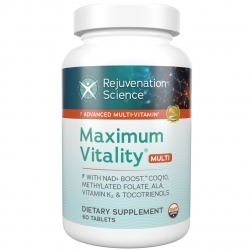
The Triage Theory of Aging provides an ideal argument for recommending a sophisticated multivitamin such as Rejuvenation Science® top-rated Maximum Vitality® multivitamin and our adjunctive Vitamin D3K2 formula.
In 2011, Professor Ames hypothesized that a whole class of new vitamins and minerals support longevity pathways.
Professor Ames' 2010 A4M PowerPoint Presentation (1.8 mb file size pdf)
This 35-minute video of Professor Ames December 2011 presentation was designed to play in Internet Explorer. If it does not play in your browser, please reopen our website in Internet Explorer.
"An inexpensive intervention could delay the degenerative diseases accompanying aging, such as cancer, cardiovascular disease, cognitive decline, and immune dysfunction. Most of the world’s population, even in developed countries, has inadequate intake of one or more micronutrients (~40 essential vitamins, minerals, fatty acids and amino acids) that a varied and balanced diet should provide.
"My triage theory (PNAS 103, 17589, 2006; AJCN 90, 889, 2009) posits that, as a result of recurrent shortages of micronutrients during evolution, natural selection developed a metabolic rebalancing response to shortage. The rebalancing favors micronutrient-dependent proteins needed for short-term survival while starving those only required for long-term health.
"Triage theory predicts that the consequence of moderate shortages of even a single micronutrient, though insufficient to cause overt clinical symptoms, will impair functions essential for long-term health. This impairment will result in insidious damage (e.g.: increased DNA damage) that, over time, leads to the acceleration of age-associated diseases (e.g.: increased cancer). As people with modest deficiencies have no overt clinical symptoms, there has been little incentive to correct these deficiencies, though this could change if it can be shown that they are resulting in biochemical changes (e.g.: chromosome breaks that are markers of increased risk of age-related diseases, such as cancer).
"The considerable experimental and theoretical support for the triage idea will be discussed as will a strategy for determining the optimum level of each micronutrient in humans. A perfect balanced diet (and adequate sunshine) would optimize levels of all micronutrients, but few reach this standard; fortunately relatively inexpensive supplements can help. The triage theory should help to put micronutrient nutrition on a firm foundation and lead to preventive medicine for age-related diseases."
Triage theory postulates that moderate micronutrient deficiencies can lead to accelerated aging and age-related diseases. The Triage Theory explains why diseases associated with aging (and the pace of aging itself) may be unintended consequences of mechanisms developed during evolution to protect metabolic processes against episodic vitamin/mineral/nutrient shortages. Ames pondered “why would nature allow so many cancers and other diseases of aging to develop?” and reasoned that these mechanisms are focused on preserving vitamin/mineral-dependent functions required for animals and humans to survive for reproduction at the expense of other functions required to sustain long-term health. As a result, Ames proposed that modest shortages in vitamins/minerals (against which critical functions are protected) lead to insidious metabolic damage (DNA damage, mitochondrial decay, and other pathologies) in less-critical functions that, over time, accelerate aging and may lead to diseases of aging such as cancer, heart disease, and dementia.
As people with modest deficiencies have no overt clinical symptoms, there has been little incentive to correct these deficiencies, though this could change as the evidence accumulates to show that there are resulting biochemical changes (e.g.: chromosome breaks that are markers of increased risk of age-related diseases, such as cancer, heart disease and dementia). Sophisticated supplementation to minimize episodic or insidious dietary deficiencies is a primary recommendation of the Triage Theory.
The Triage Theory has widespread implications for public health and anti-aging/functional medicine because modest vitamin/mineral deficiencies are quite common. It also suggests a new scientifically based and consistent strategy for establishing optimal vitamin/mineral intake standards, and provides a research strategy to uncover early biomarkers of pending diagnosis of chronic disease. RDAs (Recommended [minimum] Daily Allowances [to avoid malnutrition disease]) and EARs (Estimated Average Requirements) should be re-examined on the basis of triage theory, which would put nutrition on a firm foundation.
A number of these micronutrient inadequacies affect more than half the U.S. population (e.g.: for Magnesium, 56% of the U.S. population is less than EAR). Societal concern is low because no overt pathology has been associated with these levels of deficiency.
Professor Ames suggests that evolutionary allocation of scarce micronutrients by enzyme triage is an explanation of why DNA damage is commonly found on micronutrient deficiency. His research team is developing sensitive assays for measuring DNA damage in human blood so as to determine what level of each micronutrient is optimum for keeping DNA damage to a minimum.
The optimum intake of micronutrients will vary among people due to polymorphisms.
The ~40 essential micronutrients identified by Professor Ames include:
| Vitamins | Minerals | Other Nutrients |
| Biotin | Calcium | Choline |
| Folic Acid | Chloride | Histidine |
| Niacin | Chromium | Isoleucine |
| Pantothenate | Cobalt | Leucine |
| Riboflavin | Copper | Lysine |
| Thiamine | Iodide | Methionine |
| Vitamin A | Iron | Omega-3 Linolenic acid/DHA |
| Vitamin B6 | Magnesium | Omega-6 Linoleic acid |
| Vitamin B12 | Magnesium | Phenylalanine |
| Vitamin C | Manganese | Threonine |
| Vitamin D | Molybdenum | Tryptophan |
| Vitamin E (esp. gamma) | Phosphorus | Valine |
| Vitamin K | Selenium | |
| Sodium | ||
| Zinc |
2011 Update
At the end of his updated presentation in December 2011, Professor Ames hypothesized that a whole class of new vitamins and minerals support longevity pathways. No one would have discovered them because the current paradigm of the value/pathways of vitamins and minerals are based on short-term effects viewable as overt clinical symptoms. He discussed longevity proteins versus essential proteins and his recent research in selenium and vitamin K supporting long-term proteins.
Omega-3 long-chain polyunsaturated fatty acid (O-3 LCPUFA) docosahexaenoic acid (DHA)
Minerals
Magnesium deficiency in human cells in culture causes mtDNA- protein crosslinks, accelerated telemere shortening, and premature senescence.
Inadequate zinc in human cells in culture causes release of oxidants, oxidative damage to DNA, and inactivation of p53 and other zinc enzymes involved in DNA damage repair.
Vitamin B
Inadequate intake of folate, B12, or B6 leads to uracil incorporation into DNA and chromosome breaks -- a radiation mimic.
High dose B vitamins can counteract a poorer Km. As many as one-third of mutations in a gene result in the corresponding enzyme having an increased Km (decreased binding affinity) for a coenzyme, causing a lower rate of reaction. About 50 different human genetic diseases due to a poorer binding affinity of the mutant enzyme for its coenzyme can be remedied by feeding high dose B vitamins, which raise levels of the corresponding coenzyme; many polymorphisms also result in a lowered affinity of enzyme for coenzyme and thus may be in part remediable. We are exploring the effect of high dose B vitamins in delaying the mitochondrial decay of aging.
Vitamin D
Vitamin E
Gamma (γ)-Tocopherol, the main form of vitamin E in the U.S. diet, unlike alpha (α)-tocopherol, the main form of vitamin E in supplements, is an effective inhibitor of three different inflammatory pathways cyclooxygenase (COX), LTB4, and TNFα at physiological concentrations, both in human cells in culture and in rats. Previous work on γT had shown it is an effective nucleophile, unlike αT, and can inactivate lipid-soluble electrophilic mutagens such as nitrogen oxides. Epidemiological evidence supporting the importance of dietary γT has been reviewed. γT also is effective in inhibiting prostate and lung tumor cells by interrupting sphingolipid synthesis.
Vitamin K
Vitamin K is a cofactor for enzymatic modification (y-carboxylation of glutamate, an amino acid residue) required to complete the maturation of vitamin K-dependent proteins so that they can bind calcium. It is known as the “Koagulation” vitamin because the first identified uses of the vitamin were associated with blood coagulation. About half of the 16 known proteins that depend on vitamin K are necessary for blood coagulation, The other vitamin K-dependent proteins are involved in a variety of different functions involving the skeletal, arterial, and immune systems. Using mouse knockout phenotypes, Ames showed that the 16 vitamin K-dependent functions could be categorized according to their relative necessity for short-term survival. Knockouts of all but one of the coagulation factors are embryonic lethal, suggesting these functions are required for short-term survival – preventing uncontrollable bleeding from any minor incident.
The pharmacokinetics of vitamin K and different tissue distributions of the vitamin K-dependent proteins suggest that a mechanism had been developed during evolution to protect coagulation factors against vitamin K deficiency at the expense of other vitamin K-dependent proteins.
Vitamin K analysis also supports the third prediction of triage theory – that loss of (vitamin K-dependent) functions not necessary for short-term survival are linked to diseases of aging. Ames identified evidence linking both genetic impairment and dietary vitamin K deficiency to a variety of diseases of aging, including bone fragility, diabetes, arterial calcification (frequently associated with atherosclerosis), acute coronary syndrome, cancer (in mice) and osteoarthritis.
Average intake of vitamin K in the US is less than even currently recommended intake recommendations (which are primarily based on levels to ensure adequate coagulation function only). Might this be related to the increased incidence of osteoporosis, arterial and kidney calcification, cardiovascular disease, and cancer? Thus adequate intake of vitamin K could help prevent these age-related conditions.
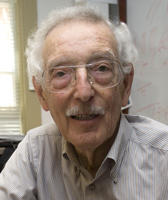
Dr. Bruce Ames is Professor of Biochemistry and Molecular Biology, Emeritus, University of California, Berkeley, and a Senior Scientist at Children’s Hospital Oakland Research Institute. He is a member of the National Academy of Sciences and he was on their Commission on Life Sciences. He was a member of the board of directors of the National Cancer Institute, the National Cancer Advisory Board, from 1976 to 1982. He was the recipient of the General Motors Cancer Research Foundation Prize (1983), the Tyler Environmental Prize (1985), the Gold Medal Award of the American Institute of Chemists (1991), the Glenn Foundation Award of the Gerontological Society of America (1992), the Honda Prize of the Honda Foundation, Japan (1996), the Japan Prize, (1997), the Medal of the City of Paris (1998), the U.S. National Medal of Science (1998), the Linus Pauling Institute Prize for Health Research (2001), the American Society for Microbiology Lifetime Achievement Award (2001), the Thomas Hunt Morgan Medal from the Genetics Society of America (2004), and the American Society for Nutrition/CRN M.S. Rose Award (2008). His 540+ publications have resulted in his being among the few hundred most-cited scientists (in all fields). www.bruceames.org
Ames BN (2006) Low micronutrient intake may accelerate the degenerative diseases of aging through allocation of scarce micronutrients by triage. Proc. Natl. Acad. Sciences USA, 103:17589-94.
Ames BN. Prevention of mutation, cancer, and other age-associated diseases by optimizing micronutrient intake. J of Nucleic Acids; rev. July 28, 2010; in press.
Ames BN, McCann JC, Stampfer MJ, Willett WC (2007) Letter to the Editor: Evidence-based decision making on micronutrients and chronic disease: long-term randomized controlled trials are not enough. Amer J Clin Nutr. 86:522-3.
Killilea DW, Ames BN. (2008) Magnesium Deficiency Accelerates Cellular Senescence In Cultured Human Fibroblasts. Proc Natl Acad Sci USA. 105:5768-5773.
McCann JC, Ames BN. (2008) Is there convincing biological or behavioral evidence linking vitamin D deficiency to brain dysfunction? FASEB J. 22, 982-1001.
McCann JC, Ames BN. Vitamin K, an example of triage theory: is micronutrient inadequacy linked to diseases of aging? Am J Clin Nutr 2009;90:889-907.
NEW PRODUCTS | |||
Microplastics Oral Saliva Testing | |||
Recently Viewed |