Welcome to Rejuvenation Science®!
 Questions? Please call us at
1-888-737-3588 TOLL FREE
Welcome to Rejuvenation Science®!
Questions? Please call us atThe combination of antioxidants and sunscreens to provide enhanced protection against UV rays has generated considerable scientific interest. Two of the best-known antioxidants are vitamins C and E. Each has been shown to be effective in different models of photodamage. In a study utilizing swine skin, vitamin C provided additive protection against acute UVB damage (sunburn cell formation) when combined with a UVB-preventive sunscreen. When a combination of vitamins E and C was used, enhanced protection from UVB insult resulted. Vitamin C, however, was significantly better than vitamin E in protecting against UVA-mediated phototoxic damage in this animal model.18
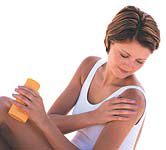
A report released by Tulane University’s School of Medicine states that “every patient should topically apply photoprotectants in order to prevent photodamage to the skin.”17 This report confirms the critical importance of applying a sunscreen with antioxidants every time you go into the sun.
A study of vitamins C and E in young, aged, and photodamaged human skin sought to ascertain the various levels of these antioxidants in each skin type. The findings showed that the concentration of vitamin E was significantly lower in the epidermis (upper layer) of photoaged skin (56% lower than in young skin) and aged skin (61% lower than in young skin). There was no difference in vitamin E levels in the dermis of each skin type. In photoaged skin, vitamin C levels were 69% lower in the epidermis and 63% lower in the dermis; in naturally aged skin, vitamin C levels were 61% lower in the epidermis and 70% lower in the dermis. Glutathione concentrations were also lower compared to young skin. These results show that the antioxidant defense systems in normal aged and photoaged human skin are significantly diminished compared to that in young skin.19
Critics used to claim there was no evidence that topically applied products affected skin aging. Many recently published studies have proven the skeptics wrong. The science clearly substantiates that free radicals play an important role in causing skin aging, and that topically applied antioxidants confer significant protection and can even partially reverse some aspects of skin aging. Newly available lipsticks, foundations, and eye preparations contain broad-spectrum antioxidants to provide the skin with all-day protection.
Vitamin A and its retinoid analogs stimulate skin cell renewal by increasing the rate of mitotic cell division.20-22 One mechanism by which vitamin A does this is by acting as a signaling agent to stimulate the binding of epidermal growth factor to skin cells.21
 One characteristic of sun-damaged skin is the degradation of its supporting structure caused by reduced collagen synthesis. A study of 72 people of various ages sought to determine whether the topical application of natural vitamin A could improve function in both naturally aged, sun-protected skin and photoaged skin. In one of the study groups comprising people aged 80 years and older, topical application of vitamin A for seven days increased fibroblast growth and collagen synthesis, while reducing levels of a collagen-degrading skin enzyme called metalloproteinase. The overall findings indicate that naturally aged, sun-protected skin and photoaged skin share important molecular features, including connective tissue damage, elevated metalloproteinase levels, and reduced collagen production. Topical vitamin A treatment reduced matrix metalloproteinase expression and stimulated collagen synthesis in naturally aged and sun-protected skin, as it does in photoaged skin.23 Vitamin A drugs (Retin-A®) have shown more profoundly acute effects in reversing aging effects in both photodamaged and naturally aged skin, but some people find them irritating to the skin.24
One of the most disfiguring skin diseases is the appearance of cancer. In a study that sought to compare the effects of dietary administration of a vitamin A drug (13-cis-retinoic acid) to those of the natural form of vitamin A (retinyl palmitate), female mice were administered a chemical carcinogen to evaluate the incidence and severity of mouse skin tumor promotion. The results showed that retinyl palmitate inhibited the number and weight of tumors, whereas 13-cis-retinoic acid decreased the weight, but not the number, of tumors promoted.25
In another study, tumors were chemically induced in a group of Swiss mice over a 23-week period. The topical application of the drug 13-cis-retinoic acid was compared to natural vitamin A (retinyl palmitate). This study showed that both the vitamin A drug and natural vitamin A inhibited the development of skin papillomas and had a marked effect on skin cancers.26 Vitamin A may be one of the vitamins best documented to protect against several types of human cancers. One of its mechanisms is to induce healthy differentiation and apoptosis of aged cells. Vitamin A protects the skin by helping to facilitate cell renewal and possibly by preventing skin cancers.
Studies show that the upper layer of the skin or epidermis can be easily saturated with natural vitamin A by topical application. Besides being a precursor for retinoic acid, vitamin A also has potential as a scavenger of free radicals. Vitamin A absorbs ultraviolet light to help protect the skin’s most delicate areas against damaging free radical attack.27 Natural vitamin A thus functions via several pathways to guard against normal and sun-induced skin aging.
The new anti-aging lipsticks and foundations contain a natural form of vitamin A to nourish the skin all day long with this cell-renewing nutrient.
There are literally hundreds of cosmetic brands in today’s commercial marketplace. To our surprise, we could find only one company whose cosmetics were fortified with nutrients that published scientific studies have shown to be beneficial to the skin.
Considering that women often apply cosmetics on a daily basis, it makes sense that the cosmetics should include ingredients that block damaging ultraviolet light, guard against free radicals, stop inflammatory processes, replenish collagen, stimulate cellular renewal, and restore the skin’s natural antioxidants. Exciting new studies show that certain nutrients, when topically applied, can reverse some aspects of skin aging. With the newly available nutrient-rich cosmetics, women have a convenient way to benefit from scientifically documented skin-restoring agents all day long.
A large percentage of the population is infected with herpes simplex virus 1, which causes cold sores or fever blisters on the lips. Exposure to solar radiation is one cause of cold-sore outbreaks. With the advent of high-SPF lipsticks that contain agents that protect against ultraviolet light, it may be possible to avoid sunlight-induced herpes outbreaks on the lips.
 Even more exciting is that for the first time, women can use everyday cosmetic products that contain the skin-protecting ingredients discussed in this article. These new cosmetics enhance a woman’s appearance while allowing her to simultaneously nourish her skin with vitamins A, C, and E, along with green, red, and white tea extracts. These anti-aging cosmetics are also fortified with high-SPF sun-blocking agents to guard the skin and lips against the deleterious effects of ultraviolet A and B light.
For ultimate benefit, the new Ultra Rejuvenex® should be worn under all cosmetic preparations. Descriptions of the new Ultra Rejuvenex® formula appears on the following pages.
1. Podda M, Grundmann-Kollmann M. Low molecular weight antioxidants and their role in skin ageing. Clin Exp Dermatol. 2001 Oct;26(7):578-82.
2. Sander CS, Chang H, Salzmann S, et al. Photoaging is associated with protein oxidation in human skin in vivo. J Invest Dermatol. 2002 Apr;118(4):618-25.
3. Nola I, Kotrulja L. Skin photodamage and lifetime photoprotection. Acta Dermatovenerol Croat. 2003;11(1):32-40.
4. Lu YP, Lou YR, Xie JG, et al. Topical applications of caffeine or (-)-epigallocatechin gallate (EGCG) inhibit carcinogenesis and selectively increase apoptosis in UVB- induced skin tumors in mice. Proc Natl Acad Sci U S A. 2002 Sep 17;99(19):12455-60.
5. Katiyar SK, Bergamo BM, Vyalil PK, Elmets CA. Green tea polyphenols: DNA photo-damage and photoimmunology. J Photochem Photobiol B. 2001 Dec 31;65(2-3):109-14.
6. Proniuk S, Liederer BM, Blanchard J. Preformulation study of epigallocatechin gallate, a promising antioxidant for topical skin cancer prevention. J Pharm Sci. 2002 Jan;91(1):111-6.
7. Katiyar SK, Mukhtar H. Green tea polyphenol (-)-epigallocatechin-3-gallate treatment to mouse skin prevents UVB-induced infiltration of leukocytes, depletion of antigen-presenting cells, and oxidative stress. Leukoc Biol. 2001 May;69(5):719-26.
8. Katiyar SK, Elmets CA. Green tea polyphenolic antioxidants and skin photoprotection (review). Int J Oncol. 2001 Jun;18(6):1307- 13.
9. Chung JH, Han JH, Hwang EJ, et al. Dual mechanisms of green tea extract (EGCG)- induced cell survival in human epidermal keratinocytes. FASEB J. 2003 Oct;17(13):1913-5.
10. Vayalil PK, Elmets CA, Katiyar SK. Treatment of green tea polyphenols in hydrophilic cream prevents UVB-induced oxidation of lipids and proteins, depletion of antioxidant enzymes and phosphorylation of MAPK proteins in SKH-1 hairless mouse skin. Carcinogenesis. 2003 May;24(5):927-36.
11. Afaq F, Ahmad N, Mukhtar H. Suppression of UVB-induced phosphorylation of mitogen-activated protein kinases and nuclear factor kappa B by green tea polyphenol in SKH-1 hairless mice. Oncogene. 2003 Dec 18;22(58):9254-64.
12. Available at: http://www.hsrmagazine.com/ hotnews/31h3016734.html. Accessed July 28, 2004.
13. Fitzpatrick RE, Rostan EF. Double-blind, half-face study comparing topical vitamin C and vehicle for rejuvenation of photodamage. Dermatol Surg. 2002 Mar;28(3):231-6.
14. Dreher F, Maibach H. Protective effects of topical antioxidants in humans. Curr Probl Dermatol. 2001;29:157-64.
15. Yin L, Morita A, Tsuji T. Alterations of extracellular matrix induced by tobacco smoke extract. Arch Dermatol Res. 2000 Apr;292(4):188-94.
16. Traikovich SS. Use of topical ascorbic acid and its effects on photodamaged skin topography. Arch Otolaryngol Head Neck Surg. 1999 Oct;125(10):1091-8.
17. Flynn TC, Coleman WP. Topical revitalization of body skin. J Eur Acad Dermatol Venereol. 2000 Jul;14(4):280-4.
18. Darr D, Dunston S, Faust H, Pinnell S. Effectiveness of antioxidants (vitamin C and E) with and without sunscreens as topical photoprotectants. Acta Derm Venereol. 1996 Jul;76(4):264-8.
19. Rhie G, Shin MH, Seo JY, et al. Aging-and photoaging-dependent changes of enzymic and nonenzymic antioxidants in the epidermis and dermis of human skin in vivo. J Invest Dermatol. 2001 Nov;117(5):1212-7.
20. Ridge BD, Batt MD, Palmer HE, Jarrett A. The dansyl chloride technique for stratum corneum renewal as an indicator of changes in epidermal mitotic activity following topical treatment. Br J Dermatol. 1988 Feb;118(2):167-74.
21. Chapellier B, Mark M, Messaddeq N, et al. Physiological and retinoid-induced proliferations of epidermis basal keratinocytes are differently controlled. EMBO J. 2002 Jul 1;21(13):3402-13.
22. Koussoulakos S, Sharma KK, Anton HJ. Effect of vitamin A on wound epidermis during forelimb regeneration in adult newts. Int J Dev Biol. 1990 Dec;34(4):433-9.
23. Varani J, Warner RL, Gharaee-Kermani M, et al. Vitamin A antagonizes decreased cell growth and elevated collagen-degrading matrix metalloproteinases and stimulates collagen accumulation in naturally aged human skin. J Invest Dermatol. 2000 Mar;114(3):480-6.
24. Varani J, Fisher GJ, Kang S, Voorhees JJ. Molecular mechanisms of intrinsic skin aging and retinoid-induced repair and reversal. J Investig Dermatol Symp Proc. 1998 Aug;3(1):57-60.
25. Gensler HL, Watson RR, Moriguchi S, Bowden GT. Effects of dietary retinyl palmitate or 13-cis-retinoic acid on the promotion of tumors in mouse skin. Cancer Res. 1987 Feb 15;47(4):967-70.
26. Abdel-Galil AM, Wrba H, El-Mofty MM. Prevention of 3-methylcholanthrene-induced skin tumors in mice by simultaneous application of 13-cis-retinoic acid and retinyl palmitate (vitamin A palmitate). Exp Pathol. 1984;25(2):97-102.
27. Sorg O, Tran C, Saurat JH. Cutaneous vitamins A and E in the context of ultravioletor chemically-induced oxidative stress. Skin Pharmacol Appl Skin Physiol. 2001 Nov- Dec;14(6):363-72.
Skin Care 1 < 2
Reprinted with the exclusive permission of Life Extension Foundation
Recommended Products |
NEW PRODUCTS | |||
Superfoods Immune Energizer | |||
Recently Viewed |