Welcome to Rejuvenation Science®!
 Questions? Please call us at
1-888-737-3588 TOLL FREE
Welcome to Rejuvenation Science®!
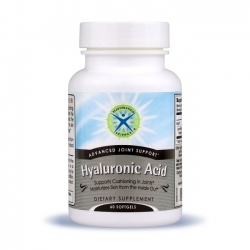
Questions? Please call us atHyaluronic acid helps to improve joint health - especially cushioning in the joints, improve the quality of synovial fluid, and alleviate the appearance of fine lines on the skin.
Hyaluronic acid is for people who need to ease the flexing of their joints, especially their knees and fingers, by restoring cushioning to their joints.
Hyaluronic acid is for men and women in their 30s and 40s who are beginning to feel the first signs of aging.
Hyaluronic acid is for seniors who have established joint conditions.
Hyaluronic acid (HA) moisturizes skin from the inside out, smoothing out wrinkles in the process. HA acts as an internal cosmetic to hydrate the skin.
Hyaluronic Acid is present in every tissue of the body. It is most concentrated in the synovial fluid which bathes the joints, in the vitreous fluid in the eye, and in the skin. Retention of water is one of the most important biological functions of hyaluronic acid,
Hyaluronic acid is found in the synovial joint fluid, the vitreous humor of the eye, the cartilage, blood vessels, extracellular matrix, skin and the umbilical cord.
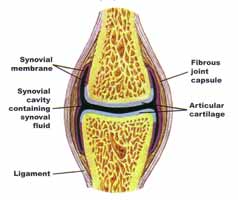 Our joints (like the elbows and knees) are surrounded by a membrane called the synovial membrane, which forms a capsule around the ends of the bones. This membrane secretes a liquid called the synovial fluid. Basically, the synovial fluid is found in joint cavities. It has many functions, including serving as a lubricant, shock absorber and a nutrient carrier. The fluid protects the joints and bones. Cartilage is immersed in the synovial fluid and is a fibrous connective tissue. Cartilage is avascular, meaning it contains no blood vessels. This is why the synovial fluid is so important. Synovial fluid is the only way in which nutrients can be carried into the cartilage and waste can be removed.
Cartilage is a specialized form of connective tissue. Hyaline cartilage is the most predominant form of cartilage in the body. It lends strength and flexibility to the body. A key component of cartilage is hyaluronic acid. Cartilage is also avascular – with no blood vessels. Nutrients are brought by the synovial fluid, which is rich in hyaluronic acid to the cartilage, which is also hyaluronicacid rich.
Hyaluronic Acid is found in the extracellular matrix (ECM). The ECM is composed of material (fibrous elements, including glycosamino-glycans) produced by the cells and excreted to the extracellular space with the tissues. All nutrients and metabolic waste are transported through the ECM. Hyaluronic acid is a major constituent of the ECM and serves as an essential structural element of the ECM. Hyaluronic acid locks moisture into the ECM and hyaluronic acid supports the structural integrity of the extracellular matrix.
In the skin, the extracellular matrix is composed of hyaluronic acid and other sulfated GAGs, combined with collagen and elastin. Large amounts of water are held in the ECM. When elastin is not bathed in water, it becomes dry and brittle, thus the look of dry, brittle, wrinkled skin.1
Half-life is defined as the time required for one half of the total amount of a particular substance to be consumed, broken down, or depleted. The half-life of hyaluronic acid in the cartilage is 2-3 weeks. But the half-life of hyaluronic acid in the skin is less than 1 day! Hyaluronic acid is present in both the dermis and the epidermis. 50% of the body’s naturally produced hyaluronic acid that is found in the epidermis is metabolized and excreted in less than 24 hours. Like hyaluronic acid produced in the body, hyleronic acid taken as a nutritional supplement moisturizes from the dermis to the epidermis - from deeper layers of the skin to the outer layer.
The extracellular matrix fills up the space between the skin cells. This makes the skin soft, smooth and elastic. But as we age, hyaluronic content in the skin changes due to two separate clinically proven factors.
Both changes leave the epidermis depleted in hyaluronic acid resulting in thinning, aging, and decreased moisture in the skin.
Medical Treatment with Hyaluronic AcidHyaluronic acid for use by humans has been derived from rooster combs. Rooster combs provide the purest form of hyaluronic acid available.
Physicians have injected hyaluronic acid directly into the synovial fluid in the knee as a treatment for osteoarthritis of the knee for the past 20 years. There are many peer-reviewed articles written on the use of hyaluronic acid extracted from rooster combs for this purpose.4,5,6 Cost is a concern. The wholesale cost for the hyaluronic acid treatment series is about $620, plus the cost of the outpatient facility and the physician.
From the Leaflet “Treating Knee Osteoarthritis with Injections” published by the American Academy of Family Physicians:
"Your doctor might inject an anesthetic agent. This is a medicine that makes your knee numb. It can stop the pain for a short time--maybe days or a few weeks. Another medicine, called a corticosteroid, can be injected along with the anesthetic. These medicines together might make your pain stay away longer.
"In the past few years, a medicine called hyaluronic acid has been used for knee injections. Some hyaluronic acid is already in the fluid in your joints. In people with osteoarthritis, the hyaluronic acid gets thinner. When this happens, there isn't enough hyaluronic acid to protect the joint like it used to. Injections can put more hyaluronic acid into your knee joint to help protect it."
Hyaluronic acid injection can be used to improve the skin's contour and reduce depressions in the skin due to acne, scars, injury or lines. Immediately or within a few hours after injection the site may be red and swollen. This usually disappears within a week. Another one or two treatments (at least a week apart) may be necessary to achieve the desired correction. Hyaluronic acid implantation is not permanent. Like natural hyaluronic acid, manufactured hyaluronic acid once injected into the skin will gradually break down and be absorbed by the body. In most cases, the hyaluronic acid augmentation usually lasts between 6-9 months. Compared to collagen implants hyaluronic acid appears to have a longer augmentation effect, possibly lasting 2 to 3 times longer than the average collagen implant. To maintain the initial results, repeat hyaluronic acid injections or top-up treatments will be necessary. Most people following this protocol have 2 to 3 treatments per year. 7
Alternative treatments which impact the hyaluronic acid in the skin include Retinoids prescribed by physicians which increase the natural synthesis of hyaluronic acid and accelerate the shedding of the skin. Chemical peels remove the top, dry layer(s) of the skin. Facials cleanse the pores and superficially moisturize the skin.
Hyaluronic acid extracted from rooster combs has too large a chemical size for absorption by the intestinal tract. When directly extracted from rooster combs, the molecular weight is 1.2 to 1.5 million Daltons (Da).2 For comparison, the average molecule weight of an amino acid is approximately 110 Da. But, wouldn’t you know it, Japanese scientists developed a proprietary enzyme-cleaving technique to lower the molecular weight of hyaluronic acid without altering its chemical nature. The final molecular weight of hyaluronic acid processed by the Injuv™ process is 5,000 Daltons. This allows hyaluronic acid to be taken orally as a nutritional supplement and absorbed in the intestinal tract.
Subsequent research has proven the absorption of oral delivery of Hyaluronic acid and then its ability to be taken up by joints. The results of this study, which examined the absorption, excretion and distribution of radiolabeled hyaluronic acid after a single oral administration in Wistar rats and Beagle dogs, demonstrated that HA is absorbed and distributed to organs and joints after a single oral administration.
Oral Delivery of Hyaluronic Acid Absorbs Effectively in Joints, Apr 18, 2004.
Alternate spelling: hyloronic, hyluronic, hyaluronicacid, hyleronic, hylauronic, hylaronic, hyloronic acid, hyaluronicacid, injuv, biocell, hyleronic, hyaluranic, hyalurunic, haluronic, hilaronic acid
NEW PRODUCTS | |||
Microplastics Oral Saliva Testing | |||
Recently Viewed |